
Aerospace Machining Manufacturer: Materials, Documentation, and Tolerance Expectations
An aerospace machining order is bought twice — once on the drawing and once on the evidence. The part itself matters, but the material state, the lot record, and the dimensional report decide whether the part is usable on an aircraft program or just a shape with a certificate. Sourcing aerospace machining from a manufacturer in China concentrates that double standard: the factory has to hold machining tolerances while proving the material, the process, and the documentation behind every lot. This guide sets out the material families an aerospace order realistically draws from, the tolerance and finish expectations worth stating on the print, the documentation a lot should carry, and how to write the inquiry so the reply you get is one you can audit.
Why does an aerospace machining order come down to verification?
Aerospace failure modes are not forgiving of a substituted alloy or a missing heat-treatment record, which is why the industry leans on material states, lot control, and documentation. The practical consequence for a buyer is that the audit starts before the order, not after it. Before any metal is cut, the manufacturer has to be able to say where the material came from, how it was verified against the mill certificate, and what records will travel with the lot. A China machining manufacturer that cannot answer those three questions in the first exchange is not a candidate for aerospace work regardless of how the part machines.
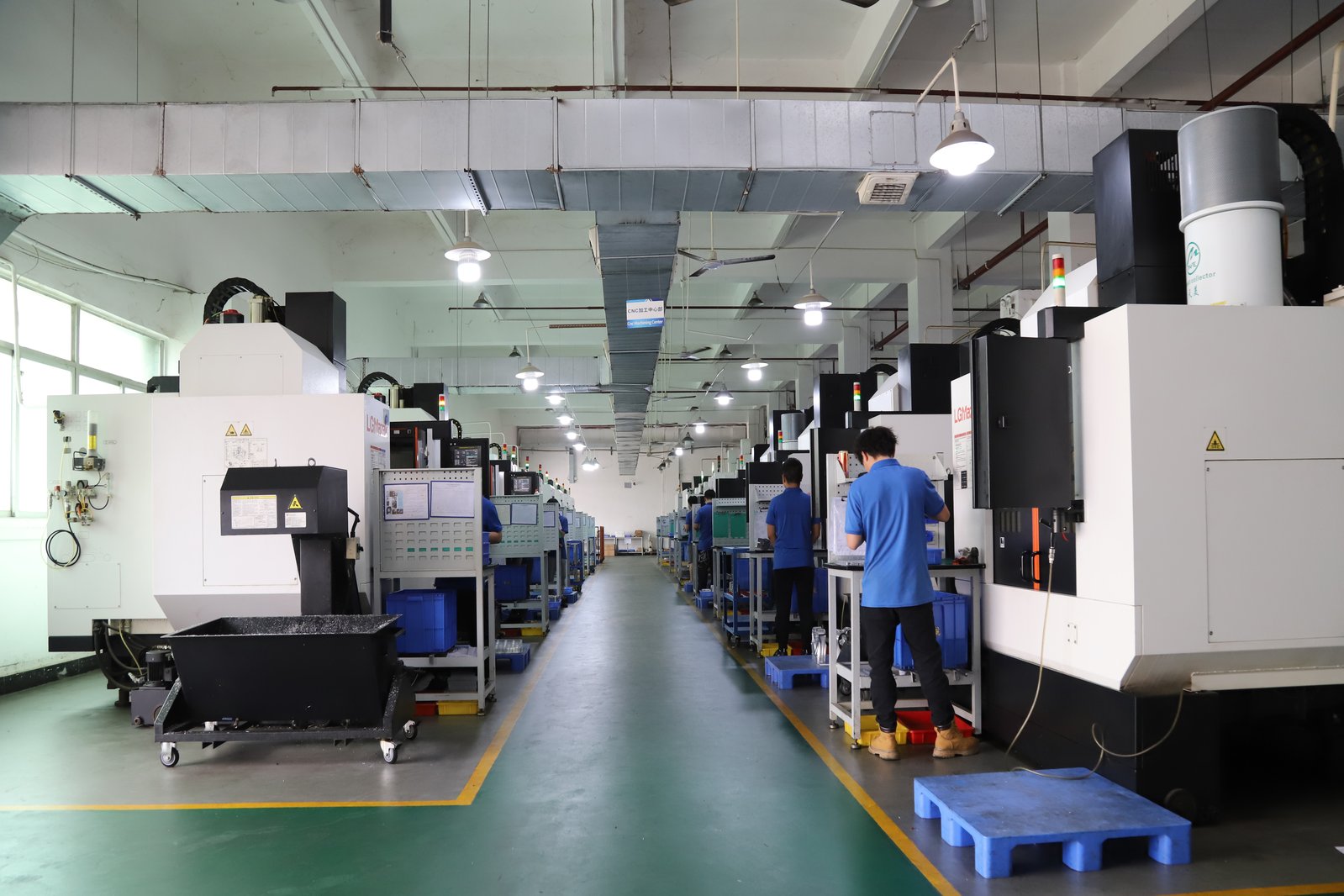
The verification bar is also why "manufacturer" matters as a word. A real factory owns its machines and its inspection bench — here, 100+ production machines and Hexagon CMMs on a 6,800 m² floor — so it can produce the evidence from its own process rather than relaying a story from someone else's shop. Buyers of aerospace parts should ask for the street address of the floor and the certificate numbers of the ISO registration in the first email; a manufacturer answers with a building and numbers you can check, while a trading desk answers with neither.
Which materials and material states carry most aerospace machining work?
Aerospace machining concentrates in a few families, and each one arrives with its own supply-chain and documentation demands:
- High-strength aluminum — 7075-T6 above all. 7075 is the aerospace grade for structural parts where strength per gram matters, offering roughly the tensile strength of a general stainless at about a third of the density. It machines predictably, and the temper — the "-T6" — is part of the spec, because an untempered or substituted lot changes the part's behavior under load.
- Titanium — TC4 (Ti-6Al-4V) for flight-critical work. Titanium earns its place where strength, weight, and corrosion resistance must coexist. It is the slowest cut on the floor and often a special-order material, and stress relief above the plant's capability is outsourced to a qualified partner and stated as such, which is exactly the kind of boundary an aerospace buyer needs disclosed, not hidden.
- Aluminum 6061-T6 and 5052 for non-structural parts. Brackets, housings, and interior components that do not carry flight loads run economically in 6061; 5052 suits parts that need marine-grade corrosion tolerance.
- Stainless 303, 304, and 316 for fittings and fasteners. Aerospace uses stainless where corrosion resistance and strength at moderate temperature matter, with 303 the free-machining choice for turned parts and 316 for chloride resistance.
Material availability is part of the schedule on every one of these families. Standard grades sit in stock; titanium and other special-order alloys extend the calendar before the machine ever starts. State the grade and the material state on the drawing, because the quote, the schedule, and the verification all hang off that single line.
Two verification habits protect the choice once the grade is on the drawing. First, confirm the material state with the mill certificate, because in aerospace the state is a specification: a 7075-T6 bar and a 7075-O bar machine the same shape and behave differently in service, and the certificate is the only place the difference is written down. Second, treat titanium as its own process, not as "a harder metal." It is the slowest cut in the shop, it springs back against the tool, and its chips carry heat that has nowhere to go. That is why the cutting plan, the tooling, and the schedule all change when the grade does. A manufacturer that can describe those differences is showing it has run aerospace material before.
Which tolerance and finish expectations are realistic?
The tolerance expectations on an aerospace part should be written against what a machining floor can hold and prove. This manufacturer holds ±0.003 mm on milling and turning and ±0.002 mm on grinding, verified on Hexagon CMMs with process capability held to Ppk ≥ 1.67 at the initial study on key characteristics and Cpk ≥ 1.33 on general characteristics. Capability is reported per characteristic: every report names the feature, its tolerance band, the sample size, the sigma method, and the study window. Realistic expectations follow three rules:
- Put the tight numbers only where the part earns them. The bore, seat, or datum that locates or seals the part gets the tight callout; non-functional surfaces float on a general class. Over-tolerancing an aerospace part does not make it safer — it adds inspection burden and cost to features that never carry a load.
- Match the tolerance to the material. Aluminum holds the band with margin and cuts fast; titanium reaches the same number only with slower feeds and rigid setups, and thin sections in either metal deflect before they hold. The DFM review should flag the features where the material makes the tolerance expensive.
- Finish where the surface works. Sealing faces and bearing seats need the fine finishes; a mirror callout on a non-functional face is a cost with no function. Where aerospace drawings call for coating or treatment, the coating grows the dimension and has to be planned into the size before the part is cut.
Set expectations this way and the quote that returns describes the part you need, not a generic "tight tolerance" promise that no inspection report could prove.
The drawing itself should name the reference the shop falls back on. When a feature is not individually toleranced, a general tolerance standard — such as ISO 2768 — sets the default band, and the class chosen on the drawing is part of the price and the inspection burden. State the general class once on the drawing, flag the two or three features that control function, and let the DFM review confirm that every remaining callout is inspectable on the metrology bench. An aerospace part specified this way gets a quote built from the actual drawing instead of a guess built from a paragraph.
What documentation should an aerospace machining lot carry?
An aerospace lot is defined by its paperwork as much as by its dimensions. The documentation bundle a serious manufacturer ships includes:
- Material certificates against the mill certificate. Every incoming lot is XRF-checked against its mill certificate before it reaches a machine, so the alloy and material state on the certificate are the alloy and state in the part, not a quieter substitution.
- Lot traceability. The record runs from the raw-material lot through the process parameters, the machine, and the operator to the inspection report. If a material issue ever surfaces, the record lets you isolate one lot instead of quarantining a year of parts.
- First-article inspection and dimensional reports. The first article is measured against every dimension on the print before the run proceeds, and production lots ship with CMM reports and SPC data showing the measured values against the callouts.
- Certificate numbers that resolve. ISO 9001, IATF 16949 (product design excluded), and ISO 14001 registrations carry numbers a buyer can check with the registrar — the same discipline aerospace applies to every sub-tier supplier.
Ask for samples of these documents before you order. A manufacturer that sends a real CMM report and a material certificate without resistance is showing its paper trail; one that describes its documentation in adjectives is telling you the trail does not exist.
The receiving check completes the loop on your side. When the lot arrives, the material certificate should match the drawing grade and state. The dimensional report should carry measured values against the callouts rather than a column of "pass," and the lot number should resolve back to the batch the manufacturer described at quote time. That three-minute check is what turns an aerospace order from a supplier's promise into a record you can file, and it is the reason the documentation belongs on the quote, not discovered at the dock.
How do you turn aerospace expectations into an inquiry that gets a useful reply?
The quality of the reply tracks the quality of the inquiry. An aerospace request that gets a useful answer states, in one message, the five things the manufacturer needs to route and price the part:
- The material grade and material state. 7075-T6, TC4, 6061-T6, not "aluminum" or "titanium." The grade and temper set the cutting plan and the verification line.
- The drawing with tolerances on the critical features only. A toleranced 2D drawing with the locating and sealing callouts flagged is a contract the shop can inspect against.
- The finish and any coating or treatment. Anodizing, passivation, and heat treatment are metal-specific, and a coating grows the dimension, so the allowance belongs on the request.
- The quantity and the program stage. A single validation part and a production lot are quoted and scheduled differently, and aerospace buyers usually want the first article before the batch.
- The documentation required. Material certificates, first-article reports, CMM data, and lot traceability are named requirements, not assumptions. Naming them puts them on the quote.
Send that inquiry and the reply will come back with a DFM review and a quote within one business day, with any dimension that cannot be held flagged before you commit. The manufacturer's full capacity and quality story — the machine list, the calibration discipline, and the inspection bench behind the ±0.003 mm claim — is in the factory guide and the quality guide. The wider buying framework for a machining manufacturer order is in the main guide.
Frequently Asked Questions
Which materials should an aerospace machining order specify?
Aerospace work concentrates in high-strength aluminum such as 7075-T6, titanium such as TC4 for flight-critical parts, 6061-T6 for non-structural brackets, and stainless 303, 304, or 316 for fittings. Each carries its own supply chain and documentation demands, and the grade plus material state belongs on the drawing.
Why is 7075-T6 the default aerospace aluminum grade?
Because it offers roughly the tensile strength of a general stainless at about a third of the density — the strength-to-weight an aircraft structure needs. The -T6 temper is part of the spec, and the mill certificate has to prove the alloy and temper actually arrived.
What tolerance can an aerospace machined part realistically hold?
±0.003 mm on milling and turning and ±0.002 mm on grinding, verified on CMMs with process capability held to Ppk ≥ 1.67 at the initial study on key characteristics and Cpk ≥ 1.33 on general characteristics. Capability is reported per characteristic: every report names the feature, its tolerance band, the sample size, the sigma method, and the study window. Put the tight callouts on the features that locate or seal, and let non-functional surfaces float.
What documentation should an aerospace lot carry?
Material certificates checked against the mill certificate, lot traceability from raw material to inspection, first-article inspection, and CMM dimensional reports with measured values. Ask for samples before you order.
Is titanium always a special-order material?
Often. TC4 and other titanium grades are frequently special-order, which extends the material lead time before machining starts, and stress relief above the plant's capability is outsourced to a qualified partner and stated as such. Name the grade early so the schedule reflects it.
How do I verify a China machining manufacturer before an aerospace order?
Ask for the street address of the floor and the ISO certificate numbers in the first email, then run the standard checks: machine list with brands and counts, XRF material verification against mill certificates, a real CMM report, and lot traceability. A manufacturer answers with evidence; a trading desk answers with adjectives.
Need an aerospace machining quote that carries the documentation with it?
Send your drawing, grade, and documentation requirements to [email protected] or call +86 13126536955. You will get a DFM review and a quote within one business day, with the material, tolerance, and document trail priced on the order.