
Machining Manufacturer's Manufacturing Facility
Machines do not keep a promise; the people who program and run them do. A delivery date survives contact with the shop floor only if the people executing it are skilled and stable, because an inexperienced hand makes the errors that become rework, and rework is what pushes a schedule off its date.
The workforce here is measured, and the numbers matter. 80% of the team are skilled technicians, 60% have 5–10 years of experience, and 70% are aged 20–35. A team that senior and that stable does not need to relearn your part every time it recurs; it remembers the setup, the tolerance, and the pitfall from the last run. That continuity is invisible in a quote but shows up directly in whether the part ships when it was promised.
The same stability is what protects a ramp. When a program scales from prototypes to production, the people who ran the first article are the people who run the volume — the programmers do not hand your part to a stranger, and the inspection bench does not relearn the critical dimensions from the drawing. A workforce that turns over slowly is a capacity asset in itself, because the knowledge of how to make your part stays inside the building instead of walking out the door.
How Does a Factory This Size Handle a Production Ramp?
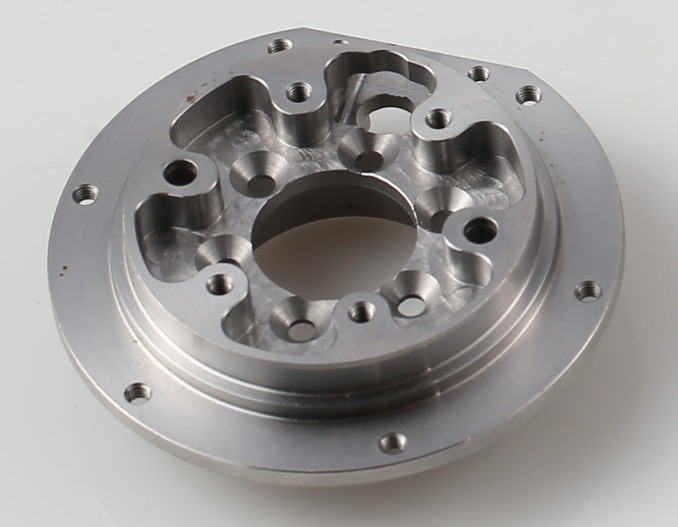
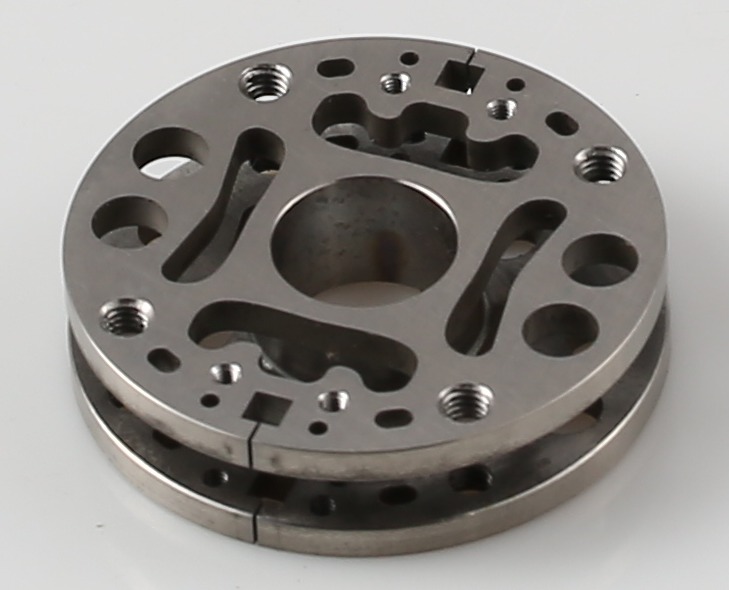
The moment that separates a supplier from a partner is the ramp — the jump from prototypes to volume. A shop that handles fifty parts beautifully and collapses at five thousand is a familiar failure, and the protection against it is a factory that was built to scale rather than one that has to improvise.
Two things make the ramp safe here. First, the 1-piece MOQ means the path from first article to full production stays on the same floor, with the same programmers, the same tooling, and the same inspection bench, so the part you approved at one piece is the part that ships at ten thousand. Second, the a hundred-odd machines spanning several families mean a growing program is absorbed by adding shifts and machines, not by shoehorning your work into someone else's queue. A ramp should feel like turning a dial, not like starting over with a new supplier.
How Does the Factory Manage Peaks and Quiet Seasons?
Every factory has a busy season, and a buyer who only orders at the peak learns the hard way which suppliers break under load. The question to ask is not "are you busy now?" but "how do you behave when you are?" A manufacturer with real capacity and a real scheduling system tells you in advance that a September order will take six days instead of five, and then hits six.
That predictability comes from redundancy, not heroics. With 50+ 3-axis centers and 25+ lathes, a surge in one product line does not have to displace every other order in the building. And because the factory can answer a quote request within 30 minutes and turn a simple part in as little as 1 day, it has the slack to absorb a rush without dropping the orders already queued. Peak-season promises that can be made in numbers are the only kind worth banking.
The quiet season tells you just as much about a factory as the peak. A shop that sits idle in its slow months has either lost customers or never had them; a shop that uses the slow months to pre-stage stock, service machines, and train people is one that will still be capable when your peak arrives. Ask what the slow season looks like and what is done with it — the answer reveals whether the operation runs on planning or on adrenaline, and only one of those survives a demand spike.
What Do the Certifications Say About the Operation?
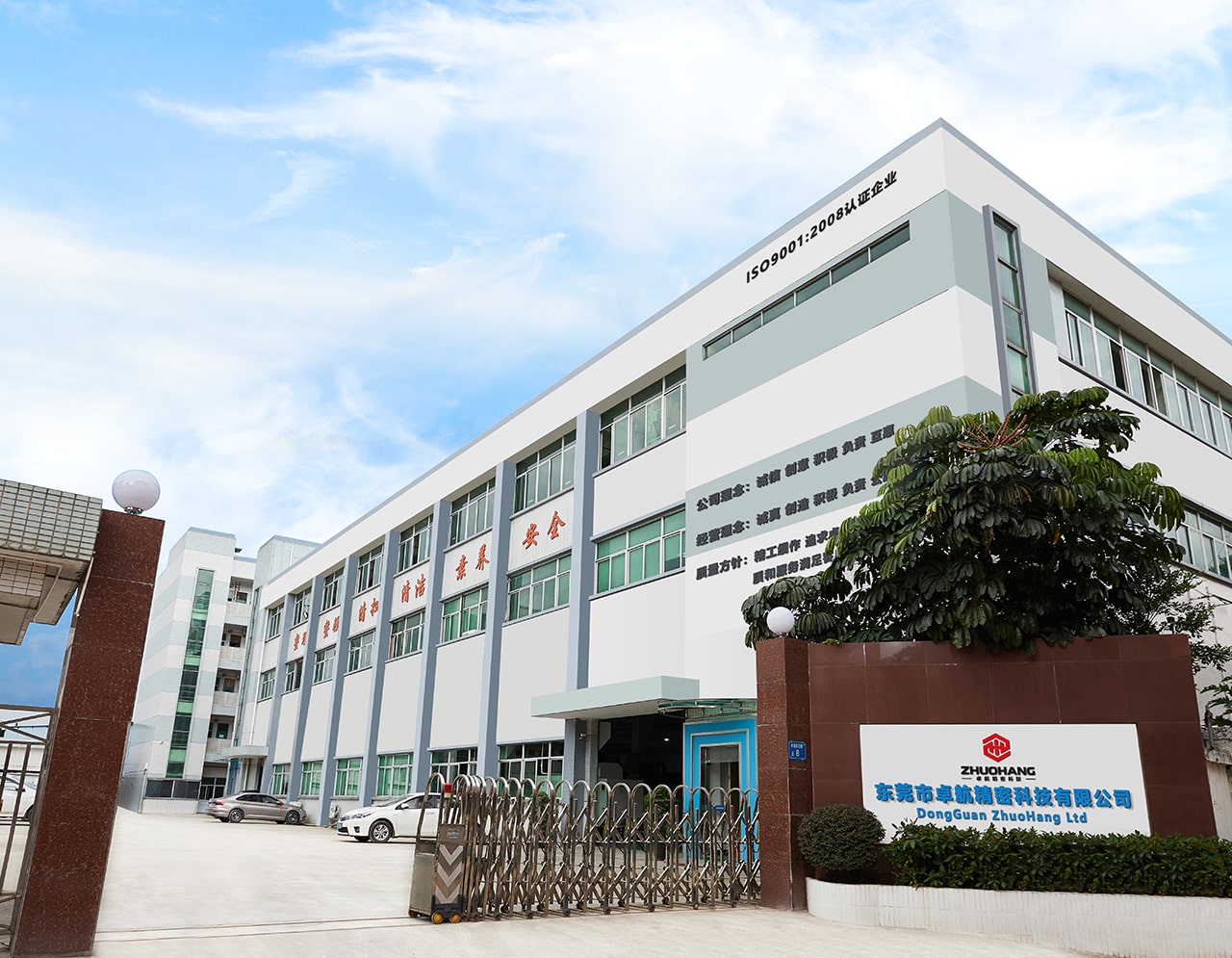
Certifications are the cheapest pre-audit you can run, because they prove a documented system is under third-party surveillance. The factory holds three, each with a verifiable number and an honestly stated scope.
| Standard | Certificate number | Scope |
|---|---|---|
| ISO 9001:2015 | 116024/A/0001/UK/En | Machining of metal parts |
| IATF 16949:2016 | 131941/A/0001/SM/En | Manufacture of CNC metal machining parts (excludes product design, Clause 8.3) |
| ISO 14001:2015 | 116024/B/0001/UK/En | Environmental management related to machining of metal parts |
Honest scope note: the IATF 16949 certificate excludes product design under Clause 8.3. This is a build-to-print manufacturer — if a program needs design ownership, that is scoped separately rather than over-promised.
How Does Machine Maintenance Protect Future Capacity?
Capacity is not a fixed asset; it is a condition that decays unless it is maintained. A factory that runs its machines without a maintenance program is borrowing against tomorrow's delivery dates — the breakdowns that show up later are just deferred promises to today's orders. If you only check the machine list, you have seen what exists today, not what will still be running when the production order lands six months out.
The maintenance question separates a factory that owns its capacity from one that merely rents it. A real program names the cadence — routine spindle checks, tool-change discipline, and periodic calibration of the inspection equipment — and keeps records of what was done and when. A shop that cannot show those records is telling you its capacity is a snapshot, not a plan. For you, the maintenance log is a leading indicator of a supplier's future dates: the machine list tells you what exists, the log tells you whether it will still be there when you need it.
The same logic applies to the inspection bench. A CMM that has drifted out of calibration will pass bad parts or reject good ones, and both outcomes cost you schedule. Periodic calibration of the inspection equipment, traceable to a standard, is what keeps a ±0.003 mm (milling) / ±0.002 mm (turning) claim meaningful month after month. A factory that calibrates its gages on a schedule is protecting not just its tolerance claim but the delivery dates that depend on it.
What Should a Buyer Verify About a Factory Before Committing Volume?
Before you stake a production line on a factory, verify four things — each cheap, each eliminating risk before the next. They are the difference between a supplier you can scale with and one you are gambling on.
- The entity: the name on the invoice, the certificates, and the building should match — here, Dongguan Zhuohang Ltd
- The floor: a hundred-odd machines and 6,800 m² are claims you can check with a live walk-through or a video call aimed at a running machine.
- The people: a skilled-technician ratio and experience distribution a factory can state is one it has measured.
- The records: a CMM report, an SPC chart, and certificate numbers are evidence — ask for them before you ask for the price.
Run those four checks before you commit volume, and the delivery date you are given will be the product of a real factory rather than a brochure. That is the difference between a schedule you can plan around and a promise you are hoping for.
The same discipline extends to what happens after the audit: a factory that keeps records of machine maintenance, training, and inspection results is one whose capability tomorrow will be at least what it is today. That continuity is what makes a long-term contract safe rather than a bet on a snapshot.
What this shop actually runs
If you ask for capability evidence, you deserve a specific answer. This facility operates 100+ CNC machines across 6,800 m2 in Dongguan, China, staffed by 100+ people. The machines, listed by category:
- 5-axis machining centres (10+) - Mazak VARIAXIS I-600 (510/910/510 mm travel, 12,000 rpm, 22 kW, 71.6 N·m, 30-tool BT40) and Mazak INTEGREX I-250H S (B-axis 0.0001°, 24 kW, 124 N·m, 38-tool HSK-A63). Typical work: compound-angle parts, single-setup multi-face prismatic work, and aerospace fittings where datum transfer loss is unacceptable.
- 3-axis / 4-axis machining centres (50+) - Brother SPEEDIO S500Z2N / S700Z2N (10,000 rpm, 14/21-tool ATC, 0.7 s tool-to-tool, Z-axis 2.2 G) and Mazak VCE-430A L / VCE-570C L (10,000 rpm, 118 N·m, 24-tool ATC). Typical work: prismatic parts, plates, brackets, housings.
- Swiss-type turning centres (10+) - Citizen Cincom A20-3F7 (Φ20 mm, 10,000 rpm), TSUGAMI B0206-III / B0205-III (Φ20 mm, 0.1 µm), STAR SR-32JII / SR-32J Type N (Φ32 mm, 8,000 rpm). Typical work: long, slender rotational parts at ±0.002 mm.
- CNC turning centres (20+) - HEADMAN T70M/1250 (720 mm swing, 117 mm bore, 3,000 rpm, BMT75 12-station turret). Typical work: shafts, bushings, flanges up to ±0.002 mm.
- Wire EDM (5+) - Sodick AQ535L (550/350/300 mm travel, ±20° taper, 800 kg workpiece). Typical work: hardened tool steel, internal splines, sharp internal corners that milling cannot reach.
- Inspection: Hexagon CMM + 20+ gauges - Hexagon CMM for coordinate measurement, plus vision system, profilometer, hardness tester, coating thickness gauge, XRF for material verification. The 10:1 rule (gauge 10x more accurate than the band) is applied to every feature.
- Machine highlights - VARIAXIS I-600: one-setup multi-face 5-axis + MAZA-CHECK auto-calibration; INTEGREX I-250H S: DONE-IN-ONE mill-turn, B-axis 0.0001° + Ai thermal shield; SPEEDIO S500Z2N / S700Z2N: Z-axis 2.2 G + 0.7 s ATC; Swiss-type: guide-bush switchable + 0.1 µm resolution.
Tolerance bands: ±0.003 mm milled, ±0.002 mm turned, ±0.002 mm ground or wire-cut. Capability indices: Ppk >= 1.67 at the initial study; Cpk >= 1.33 ongoing in production.
Certifications: ISO 9001:2015 (116024/A/0001/UK/En) · IATF 16949:2016 (131941/A/0001/SM/En, design clause 8.3 excluded) · ISO 14001:2015 (116024/B/0001/UK/En), held by Dongguan Zhuohang Ltd (USCC 91441900MA4UWT6X39, since 2005).
Service area: we supply Austria, Belgium, the Czech Republic, Denmark, France, Germany, Greece, Hungary, Ireland, Italy, the Netherlands, Spain, Sweden and the United Kingdom in Europe; Brazil, Canada, Mexico and the United States in the Americas; China, Israel, Japan, Singapore and Sri Lanka in Asia; Australia and New Zealand in Oceania; and South Africa in Africa, with worldwide delivery from China.
Contact: Felipe Iglesias, [email protected], +86 13126536955.
Verify the factory before you commit volume
Ask for the machine list, a live walk-through, and a CMM report — contact [email protected] or call +86 13126536955.
Frequently Asked Questions
How much capacity does the facility hold?
In short, The facility covers 6,800 m² and runs 100+ production machines — milling, turning, mill-turn, and grinding — staffed by 100+ people. It serves 100+ customers with an annual output of 1,000,000+ pieces, so an order is rarely queued behind a single bottleneck.
How does the workforce protect a delivery schedule?
80% of the team are skilled technicians, 60% have 5–10 years of experience, and 70% are aged 20–35. A skilled, experienced workforce makes fewer errors and needs less rework, which is what keeps a quoted lead time from quietly inflating.
Can the factory handle a production ramp?
In short, Yes. The MOQ is 1 piece, so a program can start with prototypes and scale into volume on the same floor with the same programmers and inspection bench.
How does the factory manage peak seasons?
In short, Redundant capacity — 50+ 3-axis centers and 25+ lathes — means a surge in one product line does not displace every other order. The factory can also answer a quote request within 30 minutes and turn a simple part in as little as 1 day, so it has slack for rush work.
When was the company founded?
In short, Dongguan Zhuohang Ltd was founded in 2005, with a founder who brings 28 years of industry experience.
Where is the factory located?
No. 8, Shuibian Songyuan Road, Hengli Town, Dongguan, Guangdong, China 523470. It is a 6,800 m² facility in Dongguan's manufacturing belt, positioned for both domestic supply chains and export shipping.
How does the Dongguan location affect lead time and shipping?
In short, The location sits inside a dense manufacturing belt, which shortens two things you care about: the supply chain for raw stock and the route to port for finished goods. Material arrives quickly because suppliers are nearby, and export orders move through the regional port network without an inland leg.
How does machine maintenance protect future capacity?
In short, Maintenance keeps capacity from decaying. A factory that runs a documented program — routine spindle checks, tool-change discipline, and periodic calibration of inspection equipment — is one whose machine list will still be true six months out.
Continue reading: Machining Manufacturer's Services · How to Contact Machining Manufacturer · Machining Manufacturer
Standards referenced on this page
- ASTM A582/A582M-12 — Standard Specification for Free-Machining Stainless Steel Bars
- ISO 14001 — Environmental management systems — Requirements with guidance for use
- ASTM E8/E8M-21 — Standard Test Methods for Tension Testing of Metallic Materials