
Aluminum vs Stainless for Machining Manufacturer Parts: A Decision Table You Can Put on the Purchase Order
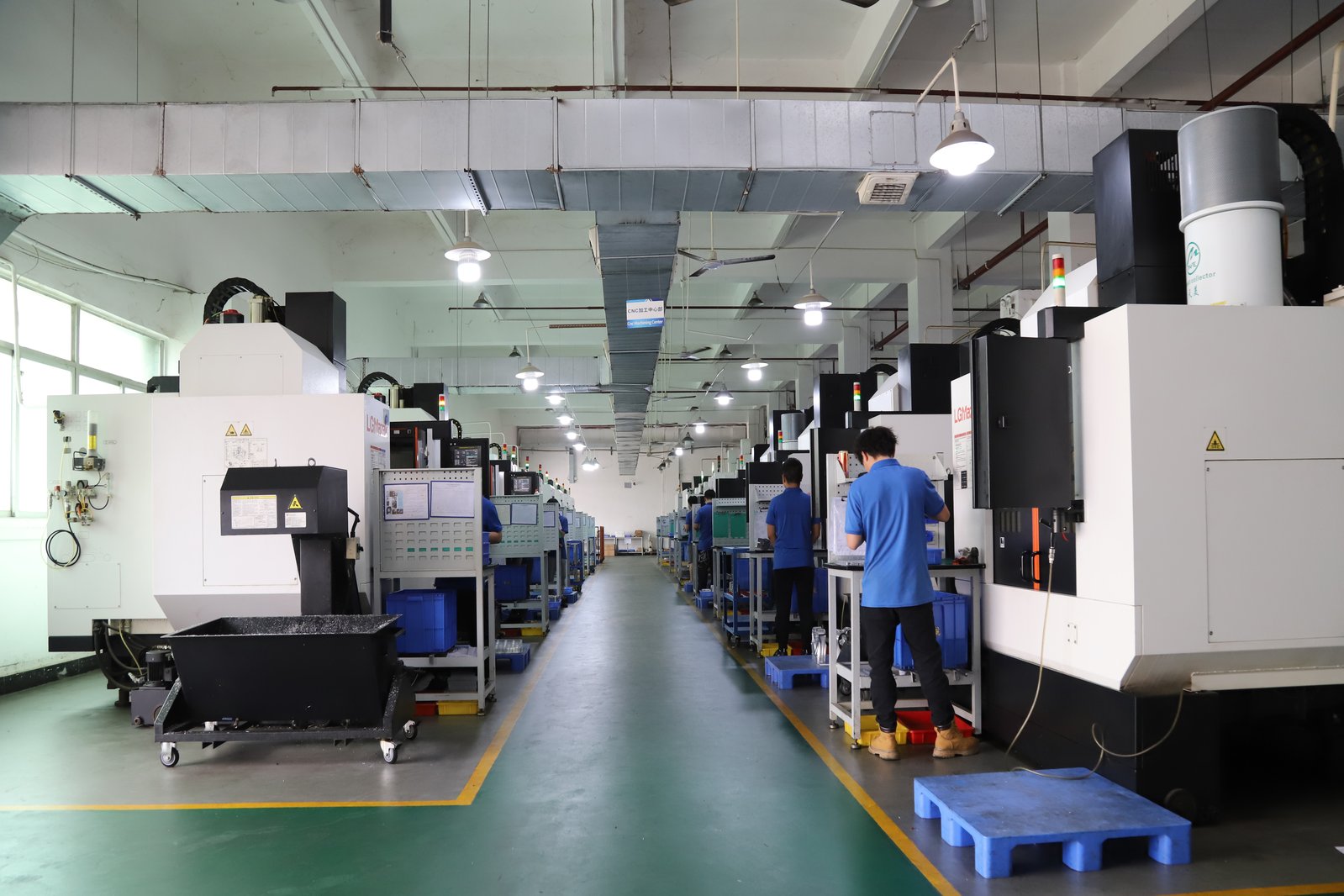
Buyers usually start this argument with price, and price has a clear winner: aluminum machines fast, costs little per kilogram, and rarely stretches a delivery date. But a machining manufacturer quotes a part, not a metal, and the quote carries stock availability, cutting time, finishing steps, and the date those add up to. Stainless looks expensive on the material line and can still be the cheaper choice for the part once duty and schedule are on the page. This guide lays out the decision axes a buyer can actually act on — weight in service, corrosion without a coating, stiffness under load, the delivery date, the tolerance band, the grade on the drawing, and the finish that follows — then closes with a table you can run before the RFQ and a short list of what to put in writing when you order.
Why does the aluminum-versus-stainless question reach the quote instead of staying in design?
A material is easy to choose in the abstract and hard to choose for one machined part, because the properties that decide it — density, corrosion behavior, stiffness — do their work after the part leaves the shop, while the costs and the calendar do their work before it gets there. Aluminum is light and inexpensive to cut, which suits indoor parts that carry modest loads. Stainless is roughly three times heavier, costs more to machine, and survives wet or chemical duty without a coating. Neither statement picks your material. What picks it is the specific part: a housing that will sit indoors, a bracket on a machine that moves, a cover that gets washed down every shift, a shaft that must not flex.
Two ground rules stop the comparison from drifting into marketing. Rule one: tolerance is not a differentiator. This floor holds ±0.003 mm on milled and turned features and ±0.002 mm on precision-ground surfaces in both families, with capability at Ppk ≥ 1.67 at the initial study on key characteristics and Cpk ≥ 1.33 on general characteristics. Capability is reported per characteristic: every report names the feature, its tolerance band, the sample size, the sigma method, and the study window., so neither metal earns the order by being "more precise." Rule two: the metals fail differently, and that difference is the real selector. Aluminum flexes when loaded, expands noticeably as it warms, and develops pits once chlorides find it. Stainless hardens at the point of cut, commands a higher price per kilogram, and fends off corrosion from its own makeup. Decide which failure mode your part cannot tolerate, and the metal name follows.
What does the material choice do to the date a machining manufacturer can quote?
On a manufacturing floor, material touches the calendar twice. The first touch is availability: the common grades of both families sit in stock and can start the day the order is confirmed, while a less common grade adds a procurement window before any cutting begins. The second touch is machinability: aluminum removes fast and keeps spindle minutes low, while stainless runs slower, needs more tool changes, and stretches the machine-time line. Together those two touches put aluminum on the short side of the schedule for an otherwise identical part, but the gap is often smaller than buyers assume, because the grade and the finish usually matter more than the family.
The tier logic on this floor makes the trade visible. A simple single-operation part fits the short end of the range at roughly 3 days; a standard part with several operations runs about 7 days; a complex part with ten to twenty steps, or any part that needs surface finishing or heat treatment, moves toward the far end at up to around 30 days. Aluminum lands near the short end as long as it ships bare. Add anodizing and the part leaves the machine, waits for a finishing partner, and returns for final inspection — the anodize step is calendar time between two ends of the schedule. Stainless that needs only passivation keeps that detour short, while a precipitation-hardening grade adds an aging treatment before the final cut. So the scheduling question a buyer should ask is not "which metal cuts faster." It is "which grade, in which condition, with which finish, still lands inside the date on the PO."
Which part actually feels the weight penalty, and which never notices it?
Density is the axis where the two families separate most cleanly: an aluminum part weighs about a third of the same geometry in steel, so a stainless version of the drawing arrives roughly three times heavier. That difference is invisible on a desk and decisive in the hand. The parts that feel it are the ones that move — a handheld instrument an operator carries all day, a bracket on a carriage that a motor must accelerate, a fixture positioned hundreds of times per shift. Every gram of stainless in those parts is mass the operator, the motor, or the machine pays for on every cycle.
For parts that do not move, the penalty never appears in operating cost. A valve body, a pump casing, or a wall-mounted bracket sits still for its working life, and what matters there is not the grams but whether the part survives the fluid, the cleaning, or the atmosphere around it. Where light weight and real strength must coexist, the aluminum family has an internal answer: the high-strength aerospace grades deliver strength close to steel at roughly a third of the weight, which is why aircraft structure is drawn in them. The weight axis therefore resolves to one question about the part — does the mass travel in service, and who absorbs the cost of moving it?, and the answer selects the family.
When does the environment assign the material before a finish is even discussed?
Both families defend themselves with an oxide layer, and from there the stories diverge. Aluminum's native oxide is thin and stable, fine for indoor air and ordinary humidity, and useless once chlorides or aggressive chemicals reach the surface — bare aluminum pits, and anodizing extends the protection rather than making it absolute. Stainless builds its defense into the alloy. The 304 grade resists general corrosion well; the 316 grade adds molybdenum, the element that stands up to chlorides, which is why marine hardware, food-contact equipment, and chemical-duty parts are drawn in 316 instead of in a coated aluminum.
Bringing up the coating question early matters for a scheduling reason as well as a metallurgical one. A coating is a process step with its own failure points — it can be scratched, chipped, or skipped — and it must be specified and verified on every order. Stainless takes that entire chain off the table: no film to maintain, no film to damage, and passivation simply lets the alloy's own protective layer grow back once machining has disturbed it. When the duty is wet, chemical, food-contact, or washdown, the practical question is not whether a coating can protect aluminum well enough. It is whether the buyer wants to carry a coating system at all when the metal itself can supply the corrosion resistance.
Where does stiffness decide the material, and what does the load path ask for?
Stiffness is the property that quietly shapes machined parts. Take two identical cross-sections, one in each family, and the stainless member resists bending about three times as well as the aluminum one — a beam, a wall, or a shaft in steel holds its line under a load that would visibly flex the same part in aluminum. Deflection matters even when nothing breaks: a bracket can be strong enough to hold together and still flex enough to let the component it supports drift out of alignment. Where alignment, sealing, or a moving load depends on a member keeping its shape, stiffness is the requirement that selects stainless, and it is also the reason thin aluminum walls bow during machining, since the springiness that flexes in the machine will flex in service.
The two families handle the load side with their own grade ladders. Stainless offers precipitation-hardening grades that age to high strength with corrosion resistance near 304, which is why valve stems, pump shafts, and high-strength fasteners carry them. Aluminum offers high-strength alloys that beat stainless on strength per kilogram, so aerospace and transport structural parts are specified in them. The shop-floor rule condenses to a sentence: if deflection is the problem, choose steel; if moving mass is the problem and the load is moderate, choose the high-strength aluminum; if both are problems, the part is asking for titanium and the quote will say so.
Why is the stainless price higher on the same drawing, and what does the extra money buy on the calendar?
Stainless carries a double premium against the identical drawing in aluminum: the raw material costs more per kilogram, and the metal cuts slower while wearing tools faster. Both effects land on the quote — a higher material line and a longer machine-time line — so the same geometry comes back noticeably more expensive in stainless, and usually with a later date attached. The grade inside the family moves the number again: the free-machining 303 grade keeps turning costs down, 304 sits in the middle, 316 runs higher, and the precipitation-hardening grades add the most because the aging treatment stacks on top of the machining.
Stainless has to justify that markup against what the part actually does in service. It buys a part that needs no paint or plating to live outdoors, that cleans up after food contact, and that carries load without flexing — properties that can remove a whole finishing step from the process chain. It does not buy tighter tolerance, since both families hold the same band. A clean way to keep the cost question from drowning the duty question is to ask them separately. Which family is cheaper to cut? Aluminum, without debate. Which family is cheaper for this part, once duty, finishing, and the required date are all on the table? That second question has an answer only the specific part can produce, and it is the answer worth paying for.
Where does each metal lose a tight tolerance — even though both hold the same band?
On this floor both families hold ±0.003 mm in CNC milling and turning and ±0.002 mm on precision-ground surfaces, with critical dimensions measured on coordinate measuring machines and process capability at Ppk ≥ 1.67 at the initial study on key characteristics and Cpk ≥ 1.33 on general characteristics. Capability is reported per characteristic: every report names the feature, its tolerance band, the sample size, the sigma method, and the study window. The capability is identical; the way each metal escapes the band is not. Aluminum is softer and springier than steel, so thin walls and long unsupported sections deflect under the cutter, and the alloy expands with temperature at roughly twice the rate of carbon steel. The effect is a rounding error on a small bracket and a genuine shift on a long housing or a plate where holes must stay tightly spaced. Handling it is a design-and-routing matter: critical tolerances belong on rigid, short features, and the shop should know in advance anywhere the part will run hot.
Stainless loses the band through work-hardening. When a cutter rubs the surface instead of shearing it, the metal hardens under the tool, the next pass fights harder, the edge dulls faster, and dimensions begin to drift. A floor that does not manage this spends the shift correcting numbers and replacing tools, and the instability shows up as scrap or a slipped date. Controlling it comes down to tooling discipline — edges kept sharp, feeds and speeds held steady, inserts changed on a schedule — and those are questions a buyer can put to the floor directly. Ask how the shop controls work-hardening on stainless and a specific answer tells you the team has fought that fight; a vague answer means your order will be the training run. The evidence that settles it is the same for both metals: a CMM report against your datum scheme, not a sentence in the quote.
Which grade belongs on the drawing, and how do you stop a substitution before it ships?
The grade line is where both families quietly go wrong, because neighboring grades look identical. On the aluminum side, 6061 is the general-purpose choice for housings, brackets, and fixtures; 6063 anodizes to the clean, even surface that cosmetic frames and heat sinks need; and the high-strength grades cover structural work that 6061 cannot. On the stainless side, 303 is the free-machining turning grade, 304 is the general-purpose austenitic grade for food equipment and structural parts, 316 adds the molybdenum that resists chlorides, and the precipitation-hardening grades deliver strength for shafts and fasteners.
The substitution risk is highest exactly where the grades look alike. The common aluminum alloys are visually indistinguishable yet differ in strength and anodize to different tones; 304 and 316 are identical to the eye even though only one carries the molybdenum that matters in chlorides. Without a composition check on the receiving dock, those grades can change hands without anyone noticing, and the part that results usually fails in the field rather than at inspection. The control that closes the gap happens at receiving: every bar is scanned on an XRF spectrometer and matched to its mill certificate before stock reaches the machines, so a mixed or substituted lot is caught at the door instead of in your assembly. Two documents tie the delivered parts to their chemistry — the mill certificate for the lot and the shop's XRF record confirming the match. A drawing that says only "aluminum" or "stainless" hands that decision to the shop; a drawing that names the grade takes it back.
How do anodizing and passivation change the verdict, and the delivery date?
Finishing is where the two families go in opposite directions. Aluminum's signature finish, anodizing, grows a layer on the surface: standard anodizing adds a thin oxide that takes color and resists everyday wear, while hard anodizing builds a thicker, denser film for parts that see abrasion. Because the film adds thickness, an anodized part needs three callouts to come back right, which features stay masked, how much layer growth the tight fits can absorb, and which type and color are actually specified. Anodizing also runs through qualified partners after machining, so it inserts a hand-off and a wait into the schedule that a quote should show rather than absorb.
Stainless finishing cleans what the alloy already protects. Cutting leaves a smear of free iron on the surface, and passivation washes that contamination away so the chromium-oxide layer can close back over — the line between a stainless part that stays clean and one that spots with rust in service. Passivation does not happen by itself, so it belongs on the drawing. Where the surface itself is the requirement — food-contact or medical parts that must clean easily — the ladder runs from as-machined through brushing to mirror polishing and electropolishing, and the callout that works names the function rather than the appearance. The finish can flip the material decision when corrosion alone does not settle it: if the part needs color and looks, anodized aluminum offers a palette stainless cannot match; if it must clean like stainless and never chip, no anodized aluminum reproduces that. Decide which of those the part is first; the right finish — and the weeks it adds — then follows by itself.
How do you put the material decision on the purchase order — a row-by-row table?
Read the table as a decision run, not a lookup. Start from the requirement the part cannot give up; that row names the winning metal, and the last column tells you what to pin down on the PO — the schedule and the verification that go with it.
| If the part's dominant requirement is… | The material that wins | Why, and what to put on the PO |
|---|---|---|
| Lowest mass on a part that moves in service | Aluminum (high-strength grade if it carries load) | About a third of steel's weight; name the grade so the strength follows the weight saving |
| Survival in salt, chemicals, or washdown without a coating | Stainless 316 | Molybdenum resists chlorides; name 316 and require the XRF record against the mill certificate |
| Food-contact or medical cleaning duty | Stainless 304 or 316 | No coating to chip or omit; put passivation and the surface spec on the drawing |
| Stiffness — the member must not deflect under load | Stainless | Roughly three times the stiffness of aluminum; confirm the section carries the load path |
| Strength per kilogram on a moving structure | Aluminum high-strength grade | More strength for the weight than stainless; confirm the temper is delivered as drawn |
| Lowest part cost and the shortest first article | Aluminum 6061 | Fast cutting and usually in stock; check whether anodizing adds a finishing hand-off |
| A tight tolerance on thin walls or long spans | Neither — fix the geometry | Both metals lose the band on unsupported features; stiffen the part or widen the callout |
| Cosmetic color and an even surface | Aluminum with anodizing | Anodize offers colors stainless cannot match; mask threads and allow for layer growth |
| Certainty that the shipped grade is the ordered grade | Either — proven by XRF | Require the mill certificate and the receiving XRF confirmation before stock is cut |
When requirements conflict — light and corrosion-resistant and strong and cheap all at once — no single row wins, and the drawing needs a trade-off conversation rather than a material pick. That conversation is what the design-for-manufacturing review is for. A machining manufacturer that reads the duty before quoting will say which requirement to relax, which to protect, and what each choice does to the date, and the reasoning should be on the record, not in someone's head.
Frequently Asked Questions
Which metal is cheaper to machine?
Aluminum. It cuts fast, is usually stocked in the common grades, and keeps both the price and the delivery date short. Stainless costs more per kilogram and machines slower while wearing tools faster, so the same drawing in stainless quotes higher and usually later. The premium pays for corrosion resistance and stiffness that aluminum reaches only with a coating.
Can stainless hold the same tolerances as aluminum?
Yes. This floor holds ±0.003 mm on milled and turned features and ±0.002 mm on precision-ground surfaces in both families, with capability at Ppk ≥ 1.67 at the initial study on key characteristics and Cpk ≥ 1.33 on general characteristics. Capability is reported per characteristic: every report names the feature, its tolerance band, the sample size, the sigma method, and the study window. The band is the same; the failure mode is not. Aluminum deflects on thin walls and moves with temperature, while stainless work-hardens at the tool edge when feeds and tooling are not controlled.
When should the drawing specify 316 instead of 304?
When the part will meet chlorides — salt water, chemicals, or aggressive cleaning agents. Molybdenum is what resists them, and it exists in 316, not 304. The grades look identical, so the drawing should name 316 and the receiving record should confirm it by XRF against the mill certificate.
Does anodizing push the delivery date out?
Usually, yes. Anodizing is done by a qualified partner after machining, so the part leaves the machine, waits for the finish, and returns for final inspection — a hand-off that adds calendar time and should appear on the quote. A bare aluminum part fits the short tier; an anodized part moves toward the longer end.
Which material should I send for a marine or outdoor part?
Stainless 316 is the dependable choice, because it resists chlorides from the alloy itself rather than from a coating that can scratch or be omitted. Bare aluminum pits under sustained salt exposure, and anodized aluminum has limits in heavy marine duty. Specify 316, include passivation, and ask for the mill certificate with the XRF confirmation.
Which quality systems stand behind the material and tolerance claims?
The machining manufacturer operates under ISO 9001:2015 (certificate 116024/A/0001/UK/En), IATF 16949:2016 (product design excluded) (131941/A/0001/SM/En), and ISO 14001:2015 (116024/B/0001/UK/En), and checks incoming material by XRF against the mill certificate before stock reaches the machines. The material record and the CMM report ship with the parts rather than living in a brochure.
Not sure which metal keeps your part — and your date — intact?
Send the drawing with the duty and the required delivery date to [email protected] or call +86 13126536955. You will get a straight read on the grade, the finish, and the schedule for each material, so the choice that goes on the RFQ is one you made on the evidence, not a guess the shop made for you.