
China Machining Manufacturer Sourcing: What to Verify Before You Pay
The moment your money leaves for a machining order in China, your position changes. Before payment you can walk away, demand documents, and ask for a live look at the floor; after payment your tools are a contract, a paper trail, and the hope that the factory is what it said it was. That asymmetry is why the verification that matters most happens before the payment, not after the parts ship. This guide is the buyer's pre-payment checklist for China machining manufacturer sourcing. It covers the company facts that must be true before money moves, the evidence that should unlock each stage of a payment, how to read a schedule claim before you fund it, and how a small first order turns an unknown manufacturer into a verified one.
Why is the payment the last lever you hold once an order starts?
Every stage of a China machining order is a negotiation until the moment money changes hands. Before you pay, the manufacturer still needs your order, so it will answer questions, share documents, and adjust terms. After the payment, the relationship inverts: the manufacturer holds your money and your parts at the same time, and your remaining influence is the paper trail you built before the money moved. That is not a comment on any particular factory — it is a property of distance, and it is the reason the pre-payment pass exists at all.
The same logic runs through the way this site frames its own delivery claims: a purchase order is only as strong as the evidence behind it. A delivery date backed by a step count, a material plan, and a finishing schedule is a date you can check before the parts ship; a delivery date backed by nothing is a date you discover is wrong after the money is gone. The buyer who verifies before paying is not slow — it is keeping the one advantage distance gives it: the power to walk away before a commitment is funded. Use that power while it lasts, because it does not survive the wire.
Which company facts must be true before your first payment goes out?
The first payment deserves the same identity check you would run before signing a lease. Pull the legal entity behind the order — the registered company name, the registration number, the registered address, and the name that will appear on the invoice, the pro forma invoice, and the contract — and confirm they all match. On this site the entity is stated plainly as Dongguan Zhuohang Ltd, and it can afford to publish that identity because the operation owns its floor rather than forwarding orders to whatever shop answers the phone. When the name on your payment instruction differs from the name on the contract or the certificates, the payment is going to someone the paperwork does not describe.
Three documents do the heavy lifting in this step. The pro forma invoice should state the seller entity, the bank account name, and the terms; the contract or order confirmation should name the same entity and the same terms; and the certificates should carry the same legal name. A manufacturer will have no trouble making those three line up, because they describe one real company. A middleman can also make them line up, but only if it stops hiding, which is why the identity check is followed by the capacity check rather than trusted alone. Bank transfers should go to a business account in the contracting entity's name, not to a personal account and not to a name that appears nowhere else in the order.
Which evidence should unlock each stage of the payment?
The cleanest way to protect a payment is to divide it into stages and attach a verifiable event to each one. The exact split is a commercial decision you make with the supplier, but the discipline is fixed: money should move when evidence moves, and the evidence should be named before the money does. A typical structure runs from order confirmation, through a first-article or sample gate, through production and lot release, to shipment and the documentation set. At each stage the buyer releases only what the next piece of evidence justifies, not the whole order on day one.
Name the evidence in the order, not after it. Before you pay the first stage, the order should state what the supplier will deliver at each gate: a confirmed schedule with the tier and the process count, a first-article inspection or a sample lot with a dimensional report, the material verification that will ship with the lot, the final inspection method, and the Incoterm that defines where the goods change hands. A supplier that accepts a staged payment structure with named evidence is treating the order as a partnership; a supplier that insists on full payment before any of that exists is asking you to fund an unverified promise. The factory behind this site quotes a minimum order of one piece for exactly this reason — a single part can carry the first-article evidence at a price you can absorb before you commit to volume.
How do you verify the schedule behind a payment request?
A payment request is, among other things, a claim about time: the supplier is asking you to fund a date. Before you fund it, read the schedule the way a scheduler would, because this manufacturer frames its dates by process steps rather than by calendar. The lead-time tiers — about 3 days for simple parts, 7 days for standard parts, and up to 30 days for complex parts with many steps or finishing — are outputs of a process count. The same logic should appear in the quote you are about to pay against. When a quoted date cannot be traced to the number of operations, the material, and the finishing steps, it is a number without a schedule behind it.
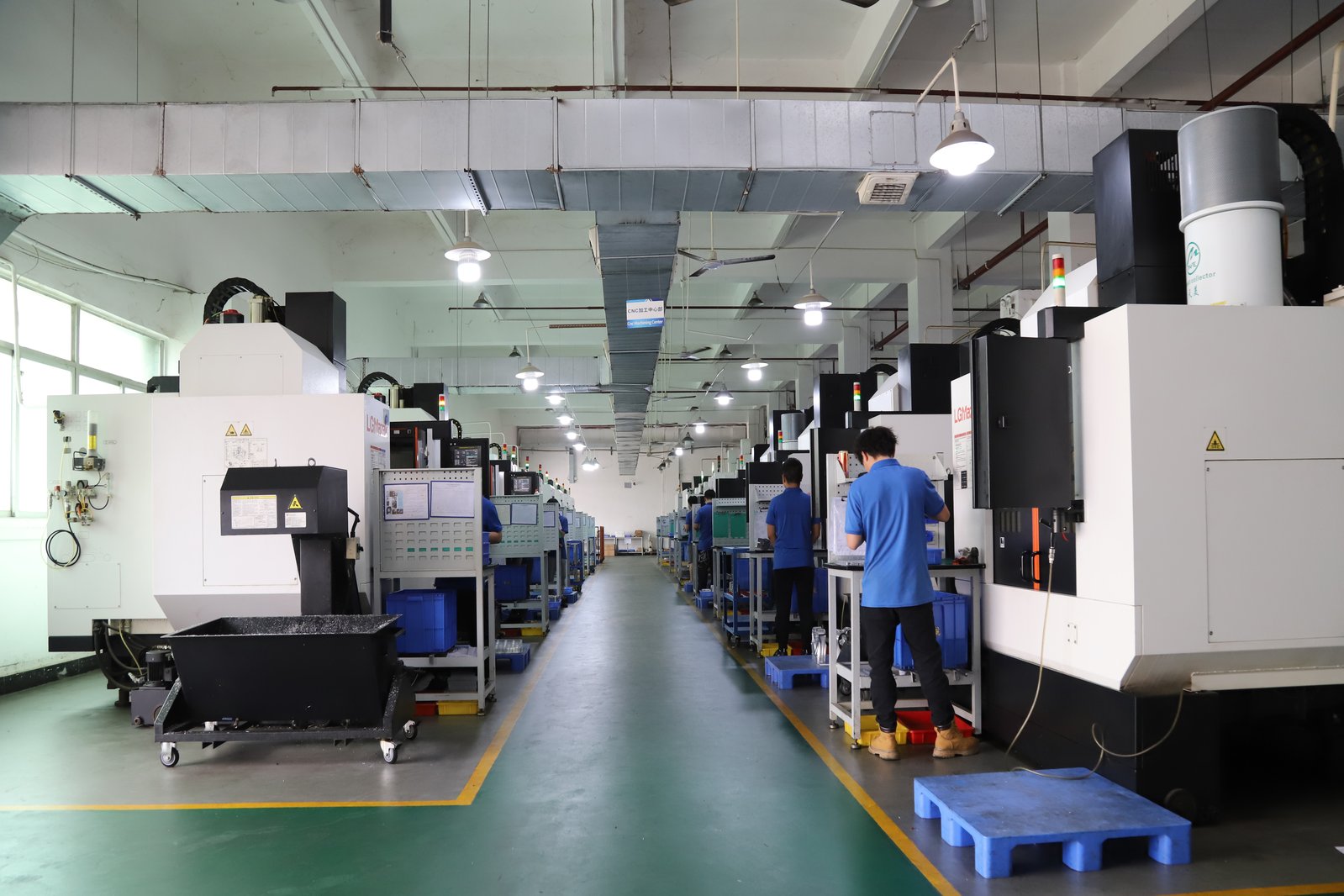
The schedule claim should also carry its own proof. A floor of 100+ production machines across 3-axis, 4-axis, and 5-axis milling centers, lathes, mill-turn centers, and grinders, inside a 6,800 m² facility, is capacity evidence you can check. On this site you can check it further by asking for a live walk-through or a video call aimed at a running machine — the same move the capacity guide on the home page puts at the center of its floor check. The quality system behind the date should show the same honesty: incoming material verified against the mill certificate, dimensions measured on calibrated CMMs with process capability tracked at Ppk ≥ 1.67 at the initial study on key characteristics and Cpk ≥ 1.33 on general characteristics. Capability is reported per characteristic: every report names the feature, its tolerance band, the sample size, the sigma method, and the study window., and a first-article inspection that gates the run. None of this is decoration; it is the reason a date can be believed before payment and checked after delivery.
What do payment and shipping terms need to say in writing?
Terms protect the buyer only when they are written into the order, which is exactly how this factory settles them: payment and shipping terms are agreed at order confirmation, not hidden in fine print, and nothing is left ambiguous before material is cut. Four fields matter most. The date — a specific calendar date or a named tier, not a vague "as soon as possible." The term — the Incoterm that defines where the goods change hands, so "delivered" means the same thing to both sides. The acceptance criteria — the tolerance, the surface finish, and the inspection standard the parts must meet to count as accepted. And the payment triggers, which evidence releases which payment, in the buyer's own words.
Shipping deserves the same explicitness as production. Because the factory sits inside Dongguan's export logistics network, freight to Europe, North America, and Japan is a routine part of the quote rather than an afterthought, which is exactly why the quote should include it. Ask about freight, packaging, and the Incoterm when you send the RFQ, so the number you are paying against covers the route to your door instead of stopping at the factory gate. A price that stops at the gate is not the price; it is the first installment of a series you will discover one invoice at a time.
Which red flags mean the payment should not go out yet?
Some findings are worth a follow-up, and some mean the payment waits. Do not pay yet when the payment instruction names a personal account or an entity different from the one on the contract and the certificates, because the money would be going to someone the paperwork does not describe. Do not pay yet when the supplier will not put payment and delivery terms in writing, because an order with unwritten terms is an order where every later dispute starts from zero. Hold the payment when the schedule cannot be traced to a process count, because you would be funding a date that has no machinery behind it. And hold it again when the capacity and quality claims collapse under a simple request. A machine list, a certificate number you can check with the registrar, and a video call aimed at a running machine are requests that a real manufacturer answers without hesitation.
The deeper pattern behind every red flag is the same one this site applies to its own delivery claims: adjectives are not evidence. "We are a big factory," "we have been in business for years," "we can do anything" — each is a sentence that any desk can write. What a real manufacturer can produce on request is a number, a name, or a document: the legal entity, the registration number, the machine list with counts, the certificate numbers, a CMM report from a real job. When the reply to a verification request is a reassurance instead of a document, the payment has not been rejected — it has been postponed until the evidence arrives.
How do you use a small first order to de-risk the big payment?
The most reliable pre-payment verification is not a document — it is a small order that behaves like a test. A single-piece minimum lets you fund a tiny first order, receive the first-article report, the material verification, and the dimensional evidence, and watch how the supplier handles the whole cycle before you commit the payment that matters. The first order answers the questions no website can: whether the paperwork matches the part, whether the date holds, whether the report is real when it arrives, and whether a problem gets a straight answer or a silence. One small order is cheaper than one large mistake, and it converts the supplier from a claim into a history — the same logic the quality page applies to the inspection records behind a delivery date.
Keep the large payment inside the same structure even after the small order passes. The verified supplier is still a business relationship across a border, and the discipline that protected the first payment protects the tenth: entity matched to the account, terms in writing, evidence attached to each payment stage, schedule traceable to a process count, and a documentation set that ships with the parts. A buyer who verifies before paying is not distrustful — it is simply making the payment the last step of a process that already proved itself. That is the difference between sending money to a name and sending money to a verified manufacturer, and it is the whole point of the pre-payment pass.
Frequently Asked Questions
Why does verification before payment matter more than verification after delivery?
After payment, your hold on the outcome shrinks to a contract and a paper trail; before payment, you can walk away, demand documents, and inspect the claim. The checks that cost nothing before money moves — entity, terms, schedule logic, capacity evidence — are the ones that are hardest to run later at any price.
Who should the first payment go to?
A business account in the name of the legal entity on the contract, the pro forma invoice, and the certificates — all three should name the same company. When the payment instruction names a different entity or a personal account, the money is leaving the paperwork, and the payment should wait until the documents line up.
Is full payment before production ever reasonable?
It becomes reasonable only after the supplier has already proven itself — for example, after a small first order with first-article evidence, material verification, and a delivered lot. On an unverified first order, structure the money around evidence: confirm the order, then gate later stages on the first-article report and the shipment documentation.
What is a typical split between deposit and final payment?
There is no universal number, and any supplier that quotes one as if it were law is oversimplifying. The split is a commercial decision between you and the factory; what matters is that each stage of the money is tied to a named piece of evidence, and that the terms are written into the order before material is cut.
What documents should I ask for before the first payment?
The pro forma invoice and order confirmation with the seller entity and terms, the certificate numbers with the certifying body, the machine list, the schedule with its tier and process count, and the Incoterm and freight terms. Ask for them before payment, because after payment they become requests instead of conditions.
Can I verify a factory without traveling to China?
Yes, up to a point. A live video call aimed at a running machine, a machine list with counts, certificate numbers you can check with the registrar, and a small first order with first-article evidence together verify more than a brochure ever could. A physical visit adds depth later, when volume justifies the trip.
Does a minimum order of one piece help a first-time buyer?
It is the cheapest test available. One piece funds the first-article report, the material verification, and the dimensional evidence at an absorbable cost, and it shows you how the supplier handles the full order cycle before you commit the payment that matters.
Verifying a China machining manufacturer before your first payment?
Email Felipe at [email protected] or call +86 13126536955. You will get the legal entity and certificate numbers to check, the machine and inspection list, the lead-time tier with its process count, and payment and shipping terms written into the order before any material is cut.