
Machining Manufacturer Cost in 2026: A Buyer's Cost Model for Delivery, Tolerance, and Price
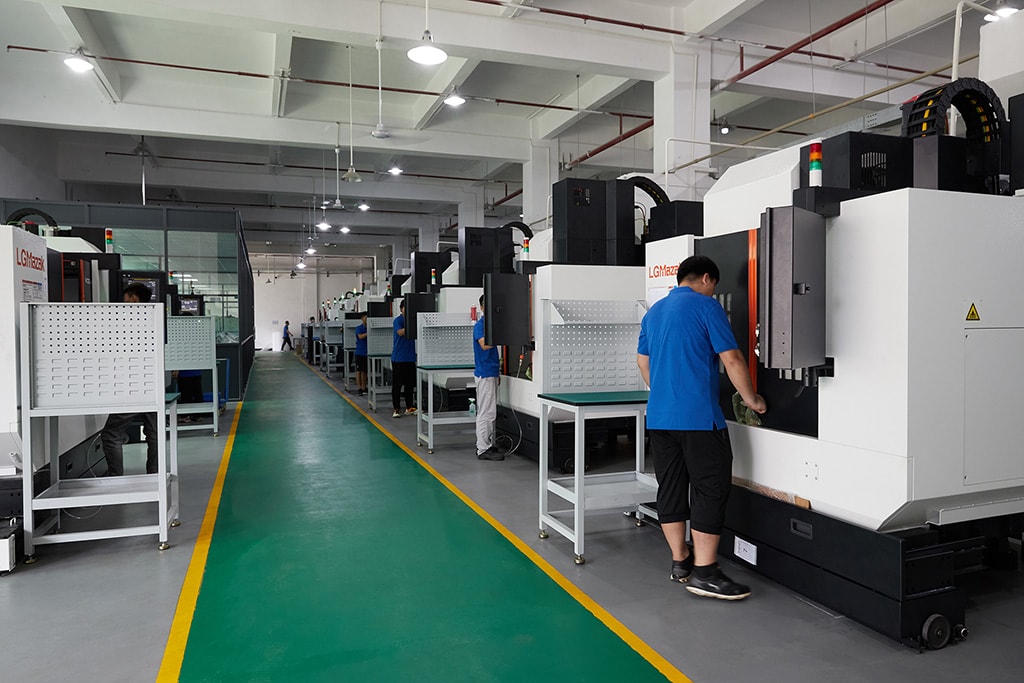
Ask what machining costs, and you will get three different answers, all of them true. The scheduler answers in days, the engineer answers in tolerances, and the buyer answers in money, and the confusion starts when they are treated as separate questions. On a real quote they are the same number seen from three sides. A part that carries a ±0.003 mm bore costs more because it takes a CMM to prove it. A part with ten process steps costs more because it occupies the floor for a week instead of a day. A part ordered at one piece costs more because it carries the full setup on its back. This guide is the buyer's cost model that ties those three answers together: the line items a machining manufacturer quote should show, how tolerance, material, and quantity move each line, what to read in a quote before you compare suppliers, and a three-step method for building a defensible budget before your first RFQ goes out.
What does machining manufacturer cost actually depend on?
The structure underneath any honest quote is the same five lines, and a manufacturer that lists them is telling you what it does while a quote that absorbs them is hiding margin where you cannot see it. On precision work the fifth line is the one buyers underestimate, because inspection and documentation are not overhead — they are the product.
| Line item | What it pays for | What moves it |
|---|---|---|
| Material stock | The bar, plate, or billet at the grade on your drawing | Grade and temper; certified lots with traceability carry a premium |
| Machining time | Spindle time to remove material and hold the features | Feature count, material toughness, and the tolerance band each feature demands |
| Setup and programming | Fixturing, toolpath work, and first-piece prove-out | A one-time cost per order that dominates small quantities |
| Finishing and special processes | Anodizing, passivation, heat treatment, deburring, assembly | Each step adds a day to the schedule and a line to the quote; outsourced steps add handoff risk |
| Inspection and documentation | CMM time, SPC charts, dimensional reports, material certificates | The tighter the band and the more GD&T categories, the more instruments the part passes through |
Notice what is missing: a rate card. A price per hour tells you nothing about a drawing with four tight bores and a flatness callout on a sealing face, because the cost is in the features and the proof, not in the machine's clock. The line-item structure is what lets you see where the money goes and compare two manufacturers on the same basis.
How much does the tolerance band move the price?
Machining cost is nonlinear in tolerance: moving a feature from ±0.1 mm to ±0.003 mm can more than double the price, because the machine, the number of setups, the tooling, and the inspection all change at once. The tighter band is not the same operation cut more slowly — it is a different process, often a different machine, always a different measurement step. On this floor, milling, turning, and mill-turn hold ±0.003 mm on critical features, and precision grinding reaches ±0.002 mm for sealing and seating surfaces — with process capability tracked at Ppk ≥ 1.67 at the initial study on key characteristics and Cpk ≥ 1.33 on general characteristics. Capability is reported per characteristic: every report names the feature, its tolerance band, the sample size, the sigma method, and the study window. And critical geometry verified on Hexagon CMMs. A recorded Cpk of 1.851 on a representative length is the kind of number that separates a process you can plan around from a claim you cannot.
One more check on that number: the 0.4 mm band behind it is wide by design. Hold the same process spread against a ±0.005 mm feature and it fails outright, so read this figure as evidence about one characteristic on one run, not as a blanket tolerance claim.
Three rules keep the tolerance line honest. Reserve the tight band for the features that engage another part — bores, locating faces, seal seats — and leave the rest on the general block, because each tight callout adds machining time and inspection. Count the GD&T categories, not just the tightest number: five profile callouts cost more to verify than one bore at the same band. And read the quote to see whether inspection is itemized. Precision without inspection is a claim; precision with inspection is a product, and the product is what you are buying.
Which material should your budget assume?
Material moves the price twice: once as stock, once at the spindle. Aluminum 6061 is the least expensive precision metal to machine — it cuts fast, holds the ±0.003 mm band predictably, and anodizes evenly, which makes it the default for housings, brackets, and plates. 7075-T6 costs more at the mill and is specified for strength, not cosmetics. Free-machining grades such as 303 stainless or 12L14 steel are designed to cut fast, which keeps the price down on turned parts. Tougher grades — 304, 316, titanium — cost more in tool wear and slower feeds before a single part is made, and titanium or premium plastics such as PEEK sit at the top of the ladder as stock and as machining time.
State the grade on the drawing — "aluminum" is not a material specification, 6061-T6 is — and verify the manufacturer checks incoming stock against its mill certificate. This floor XRF-verifies every lot at receiving, because a substituted alloy passes every dimension and fails in service. Material also reaches into the schedule: a grade that must be ordered, certified, or sourced from a special supplier adds days before the first chip, which is why material choice shows up in the lead-time discussion on this site as well as in the price. Budget the material for what the part does in service, not for what cuts easily.
How do quantity and lead-time tier change the unit price?
Quantity changes which costs the unit price has to carry. The one-time lines — setup, programming, fixturing, first-article inspection — are fixed whether you order one part or a thousand, so a single prototype carries the entire fixed cost on one piece. That is why prototype quotes look expensive and why comparing them to a production tier without that context misleads. This floor runs a minimum order quantity of one, with prototypes on the same machines and tolerances as production, so you can prove a part on schedule before committing volume.
Lead time is priced into the same structure, because it is set by process count. Simple parts with few operations run to roughly 3 days, standard parts to about 7 days, and complex parts running 10–20 process steps — or any part needing surface finishing or heat treatment — to up to 30 days. Every finishing step that leaves the building adds days, and those days should be in the quote. A manufacturer whose delivery promise and its price both come from the same process count is giving you one honest number; one that quotes a price from one process and a date from another is giving you two hopes.
What should the quote show so you compare manufacturers honestly?
A quote you can compare states its assumptions, not just its total. Before you set two manufacturers side by side, make sure each quote shows the same five things:
- The tolerance and GD&T it will actually hold per feature, not a single best-case number.
- The measurement method — what is measured, with what instrument, and what is reported.
- The material grade, and how the lot is verified against the mill certificate.
- The finishing and special processes included, and whether they run in-house or through a named partner.
- The quantity tier, with prototype and production stages separated on the same page.
Two quotes for the same drawing can differ for honest reasons — inspection scope, process assumptions, finishing vendor — which is why the comparison is never just the bottom line. When a line is missing, assume the cost is hiding rather than absent: a quote without an inspection line is either not measuring or burying the CMM time in the margin, and a quote that "includes" anodizing without naming the coating type has not planned the dimension change. The checks that separate a real manufacturer from a middleman — machine list, certificate numbers, measurement evidence, honest design review — are laid out on the parts ordering guide, and the quality system behind the reports is on the quality page.
How do you build a 2026 budget you can defend?
Use the same three-step sequence this site recommends for every precision program, because a budget built on an un-reviewed drawing is a budget built on the wrong part.
- Get the design-for-manufacturing review before you budget. Send the drawing and ask the manufacturer to flag the features that are tighter than the function needs, the geometry that fights the tool, and the finishing that will change the final size. Fix the drawing first; then budget the fixed drawing, not the first draft.
- Quote a prototype at MOQ 1. One piece, on the same machines and tolerances as production, with first-article inspection. The prototype quote is your honest anchor: it shows the fixed costs at full weight and proves the drawing is machinable as written.
- Quote the production tier on the same page. The same manufacturer gives you the per-unit price at your planned quantity with the fixed costs spread, plus the lead-time tier your process count earns. Compare that number against other suppliers only when all quotes state the same tolerance scope, material grade, and finishing plan.
Finally, verify capacity before you commit volume, because a price is only as real as the date attached to it. The factory page describes the machine base and how jobs are scheduled, and the capacity-focused index on this site explains how to read a delivery promise. A manufacturer that can name its capacity and its schedule can stand behind its price; one that cannot is selling you a number and hoping the floor cooperates.
Frequently Asked Questions
How much does machining cost in 2026?
No honest manufacturer quotes a price without a drawing, because the price is set by the number of tight features, the material grade, the process count, and the quantity, not by the year. You can estimate the range yourself: a simple part in 6061 at production quantity sits at the low end; a complex part with many GD&T callouts in a tougher grade at prototype quantity sits far higher.
Why does a precision quote cost more than an instant-quote platform price?
Instant-quote platforms price from a simplified model of the part and often assume commercial tolerances and standard inspection. A manufacturer's quote prices the features your drawing actually calls out, the CMM time that proves them, and the process count that schedules them. The two are different products, which is why comparing them on price alone misleads.
What tolerance can you hold, and what does specifying it cost?
Milling, turning, and mill-turn hold ±0.003 mm on critical features; precision grinding reaches ±0.002 mm for sealing and seating surfaces, with process capability tracked at Ppk ≥ 1.67 initial under SPC. Cost rises with each step because the machine, the setups, the tooling, and the inspection method all change at once. That is why the economical drawing reserves the tight band for the features that engage another part.
Do prototypes and production runs cost the same way?
No. A prototype carries the full setup, programming, and first-article cost on a single piece, so its unit price is higher; production spreads those fixed costs across the run. The honest quote lists both tiers on the same page, and MOQ is one piece so you can prove the part before committing volume.
What is your lead time, and does it affect the price?
Lead time is set by process count: roughly 3 days for simple parts, 7 days for standard parts, and up to 30 days for complex parts running 10–20 steps or needing finishing or heat treatment. Price and lead time come from the same process count, so a quote that prices one process and dates another is a quote to question.
Which materials do you machine, and which is cheapest to specify?
Aluminum 6061 and 7075, stainless 303, 304, 316, and 17-4PH, alloy steel, titanium, brass and copper, plus engineering plastics including PEEK and POM/Delrin. Aluminum 6061 is the least expensive precision metal to machine; titanium and premium plastics sit at the top of the ladder. Every lot is XRF-verified against its mill certificate before cutting.
Which certifications back the manufacturer?
ISO 9001, IATF 16949, and ISO 14001 — a documented system under third-party surveillance, with the IATF scope excluding product design under Clause 8.3 as a build-to-print manufacturer. Ask for the certificate numbers and check them with the registrar; the numbers are part of the evidence, not decoration.
Want the line-item quote for your drawing?
Email the STEP or IGES model and toleranced 2D drawing to [email protected] or call +86 13126536955. You will get a design-for-manufacturing review that flags the features driving cost and schedule, and a quote with prototype and production tiers on the same page.